
Holiday rentals wells-next-the-sea: what to know before you book
Опубликовано 28 сентября 2026
Holiday rentals Wells-next-the-Sea fill up fast, and the ones closest to the quay go first. Book six to nine months ahead for summer weeks, expect a Friday-to-Friday changeover in most cottages, and check the parking situation before you fall in love with a photo. That's the short answer. The rest is about avoiding the small mistakes that turn a good trip into a stressful one.
Most rentals sit within a short walk of the quay and the beach road.
Why Wells-next-the-Sea suits a rental
Wells is a working harbor town with a beach that sits a mile from the quay, and that distance shapes everything about where you stay. Rent a place near the Buttlands or the quay and you can walk to the pubs, the fish and chip shops and the little cinema without moving the car. Rent further out and you'll drive to the beach car park every morning in season.
The town is small enough that "central" and "quiet" aren't opposites. A street two minutes back from the harbor is still walkable but noticeably calmer at night. If you're traveling with young children, that trade-off matters more than the view.
One thing catches first-timers out: the beach is reached by a narrow toll road or a long walk past the boating lake. A rental advertised as "near the beach" can mean either. Ask which.
Cottages, apartments or something bigger
Most holiday rentals in Wells-next-the-Sea are converted fishermen's cottages sleeping two to six, plus a smaller stock of apartments and a handful of larger houses for groups. The type you choose decides your parking, your stairs and your outdoor space more than the price does.
| Property type | Best for | Typical size | Watch out for |
|---|---|---|---|
| Fisherman's cottage | Couples, small families | 2-3 bedrooms | Steep stairs, no parking |
| Harbor apartment | Couples, short breaks | 1-2 bedrooms | Noise in peak season |
| Townhouse | Two families sharing | 4-5 bedrooms | On-street parking only |
| Converted barn | Groups wanting space | 4+ bedrooms | Car needed for everything |
Older cottages are charming and uneven. Low doorways, narrow staircases and bathrooms on the ground floor are normal here, not a sign of a bad listing. Read the floor plan if there is one.
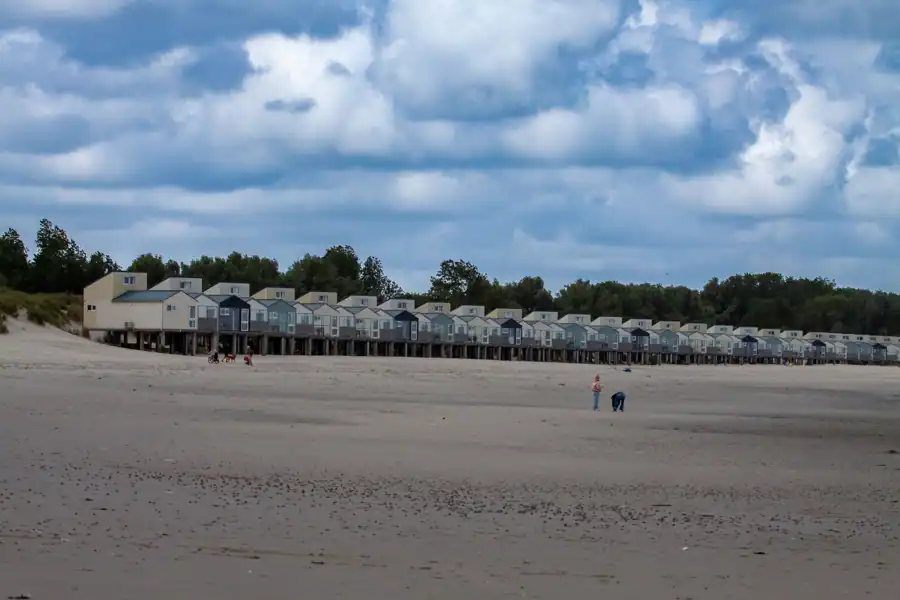
Photo: Peter Jochim · Pexels
When to book and what it costs
Demand in Wells is driven by school holidays and the seal trips from Morston, so the calendar splits into three very different pricing bands. Summer weeks and half-terms sell out earliest; winter weekends are cheap and often available at a few weeks' notice.
Changeover day is usually Friday or Saturday, and most cottages run weekly in peak season with short breaks outside it. If your dates are fixed, book the property before you book anything else, train tickets and ferry crossings are easier to move than a cottage in August.
Deposits are typically a third of the total, with the balance due a few weeks before arrival. That balance date is the one to put in your calendar. Miss it and you can lose both the booking and the deposit.
Seven checks before you pay a deposit
Five minutes of checking prevents most holiday-rental disappointments. Run through this list before money changes hands.
- Parking. Is there an allocated space, a permit, or nothing? In central Wells, nothing is common.
- Changeover day and minimum stay. A three-night weekend may not exist in July.
- Stairs and access. Ask for photos if anyone in your group struggles with steps.
- Wi-Fi and phone signal. Some older cottages have thick flint walls and weak reception.
- What's included. Linen, towels, heating and a welcome pack vary enormously.
- Cancellation terms. Check whether you get a refund, a credit note, or nothing.
- Who you're paying. Confirm the agency or owner name matches the bank details.
Item seven is the one people skip, and it's the one that costs the most when it goes wrong. If the name on the payment request doesn't match the name on the listing, stop and ask.
Photo: Patrick · Pexels
Parking, pets and accessibility
Parking is the single biggest practical difference between two otherwise identical rentals in Wells-next-the-Sea. The town has limited on-street space and a main car park near the quay, so a cottage with its own space is worth a real premium in summer. If you're arriving with two cars, say so before booking, many owners limit vehicles per property.
Pets are welcome in a good number of cottages, but policies differ on size, number and whether dogs may go upstairs. Ask directly rather than assuming. If someone in your party needs step-free access, a ground-floor bedroom and a wet-room shower, filter for those features first and treat everything else as negotiable. A directory of accessible holiday apartments is a sensible starting point before you shortlist.
And if you're renting your own place out, remember that presentation sells: the same principles that make a listing easy to book are the ones in this guide to making house cleaning easier before guests arrive.
Booking direct versus a portal
Booking direct usually means a lower total, because you're not paying the platform's guest fee on top of the owner's rate. You also get to ask questions about the property before you commit, parking, stairs, pets, and get an answer from the person who actually knows.
The trade-off is protection. Large portals offer standardized cancellation and dispute processes; a private owner may not. Check how payment is taken and whether there's a written rental agreement. Owners who rent their holiday property for less by cutting out the middleman still need to offer clear terms, and good ones do.
Whichever route you take, keep the listing page, the confirmation email and the payment receipt together in one folder. If something goes wrong on arrival, that folder is your evidence.
Questions people ask
How far in advance should I book a holiday rental in Wells-next-the-Sea?
For a summer week or a school half term, aim for six to nine months ahead, the best-located cottages go first. Outside peak season, two to four weeks is often enough, and winter breaks can be booked at short notice.
Do I need a car?
Not if you stay centrally. The quay, shops, pubs and the beach walk are all reachable on foot. A car helps for the wider coast, Holkham, Blakeney, Burnham Market, and is close to essential if you rent outside the town.
Is Wells-next-the-Sea good for families?
Yes. The beach is wide and gently shelving, the town is compact, and the boating lake and miniature railway keep younger children busy. The main practical issue is the walk or drive to the sand, so check the location carefully.
What's the usual changeover day?
Friday or Saturday in most cottages, with weekly bookings standard in high season. Short breaks are more common in spring, autumn and winter.
Are pets allowed in rentals here?
Many cottages accept dogs, but rules on size, number and upstairs access vary. Confirm the policy in writing before you pay, and expect a small additional cleaning charge.
The practical takeaway
Decide what matters most, parking, walkability or space, and let that filter your shortlist before you look at photos. Book early for summer, confirm the changeover day and payment terms in writing, and ask the owner the awkward questions up front. Do that and the rental becomes the easy part of the trip.
More on the site
Read next

Holiday villa rentals majorca: a practical guide
The cheapest villa on the page is rarely the cheapest week. Holiday villa rentals in Majorca look simple, pick a house, pick a date, pay, but the…
Malta holiday package: a practical guide
A Malta holiday package is a single booking that bundles your flights, airport transfers and accommodation, sometimes meals and excursions too, into…
Villa holiday rentals Spain: what to know before you book
Book the villa for the people, not the photos. A private pool, a 2-3 hour flight from the UK and a week of self-catering in the sun sounds simple…