
Greece holiday islands — what to know before you book

Greece has over 200 inhabited islands, and the one you pick decides almost everything about your trip, the price, the crowds, the beaches and how much time you spend on ferries. This guide covers the main island groups, when to go, what a week actually costs, and the booking mistakes that cost travelers the most.
The island groups, and why they matter
The Greek islands split into six main groups, and the group you choose shapes your whole holiday more than the individual island does. The Cyclades sit in the middle of the Aegean and deliver the white-and-blue postcard look. The Ionian Islands run down the west coast, greener and softer, with Corfu, Zakynthos and Kefalonia. The Dodecanese stretch along the Turkish coast, Rhodes, Kos, Karpathos. Then there's Crete, which is really its own category, plus the Sporades and the Saronic Gulf islands near Athens.
Wind matters here. The Cyclades catch the summer meltemi, a steady northern wind that keeps temperatures bearable in July but can cancel smaller ferries. The Ionian is calmer and greener. If you get seasick or you're traveling with young children, that single difference can decide your holiday.
Distances matter too. Athens to Santorini is a long haul by sea; Athens to Aegina is under an hour. The closer the island, the cheaper and shorter the journey, and the more of your week you spend on the beach instead of in transit.
Which Greek island suits your holiday
Match the island to the trip you actually want, not the one that looks best on a screen. A honeymoon couple, a family with a toddler and a group of friends celebrating a birthday should not book the same place.
| Island | Best for | Beaches | Getting there | Typical peak week (self-catering, 2 people) |
|---|---|---|---|---|
| Crete | Families, long stays | Wide, sandy, varied | Direct flights, large airport | $700-1,400 |
| Rhodes | History plus resorts | Sandy, organized | Direct flights | $650-1,300 |
| Kos | Cycling, families, short hops | Long sandy strips | Direct flights, ferry to Turkey | $600-1,200 |
| Corfu | Couples, green scenery | Mixed sand and pebble | Direct flights | $650-1,300 |
| Santorini | Couples, views, photography | Volcanic, often crowded | Flights or long ferry | $1,400-3,000 |
| Naxos | Value, food, quiet nights | Long sandy beaches | Ferry from Athens | $550-1,000 |
Prices above are rough self-catering ranges for two people in high season and swing widely by location and how early you book. If your dates are fixed to school holidays, expect the top of each range.

Photo: Wolf Art · Pexels
A closer look at a holiday on Kos, Greece
Kos earns its reputation as one of the easiest Greek islands to book for a first trip. It's flat, which is unusual for Greece, so you can cycle between beaches and villages instead of renting a car. The airport takes direct flights from across Europe, and the island sits minutes by ferry from Bodrum in Turkey, which makes day trips simple.
The south coast has the long sandy stretches, Kardamena, Tigaki, Marmari, while Kos Town mixes a harbor, a medieval castle and Roman ruins within walking distance of each other. That combination of beach, history and flat terrain suits families and couples equally.
Two things to know. First, the north coast catches more wind, which is great for windsurfers and less great for a still sunbathing day. Second, Kos is popular with package operators, so self-catering apartments in the same resort can vary hugely in quality for similar money, read the location, not just the photos.
When to go: season, crowds and prices
Peak season in the Greek islands runs from mid-July to the end of August, when prices roughly double compared with June or September. The sea is warm from June through October, and September often gives you the best combination of warm water, quieter beaches and lower rates.
Shoulder months change the character of a trip. In May and early June, some smaller islands still have half their tavernas shut and ferries run on reduced schedules. In October, the weather is usually still pleasant but the risk of rain rises, especially in the Ionian.
August also brings the strongest winds in the Cyclades and the highest ferry disruption risk. If your itinerary depends on connections, avoid the last week of August.
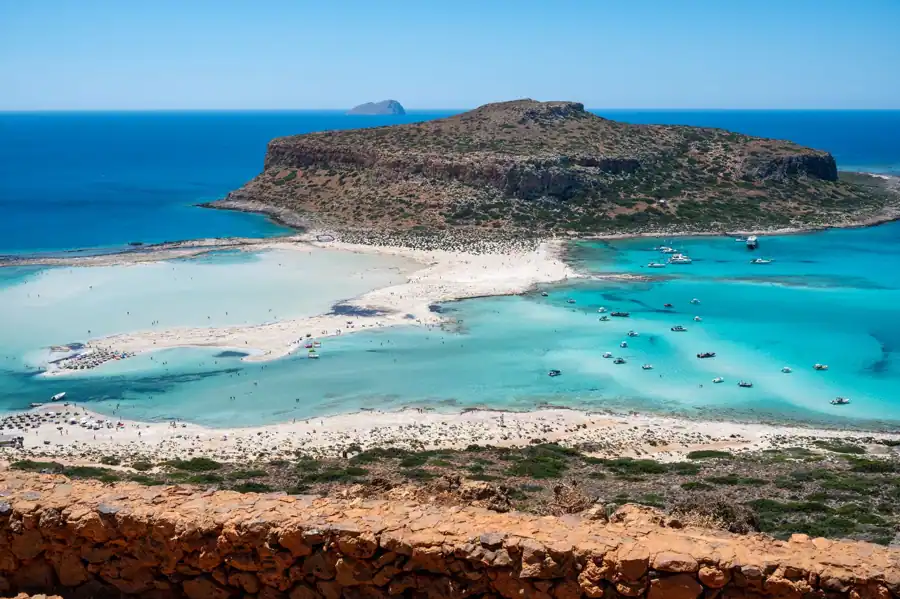
Photo: Milen Stoyanov · Pexels
Ferries and island hopping: the reality
Island hopping looks romantic on paper and eats days in practice. Ferries are reliable on the main routes, but a hop between two smaller islands can take six hours or more with a change in Athens or Paros. Two islands in a week is comfortable. Three is ambitious. Four is a coach tour with a sea view.
- Book high-speed ferries early for July and August, popular routes sell out.
- Allow a full day for any transfer involving two ferries.
- Keep luggage light; you'll be carrying it on and off ramps yourself.
- Check whether your arrival port and your accommodation are actually near each other.
If you'd rather not move at all, pick one island with enough variety, Crete, Rhodes or Kos, and treat it as a base for day trips.
Booking accommodation without overpaying
Book early for peak weeks and late for shoulder season. Villas and apartments in the Greek islands are largely family-run, and many owners release summer dates in January and February. By May, the best-value places in popular resorts are gone, and what's left is either expensive or badly located.
Where you book also changes the price. Booking direct with an owner usually cuts out a platform commission, and you can often ask questions about the actual walking distance to the beach before you commit, something a listing photo will never tell you. If you're renting out your own place, the same logic applies in reverse: renting your holiday property for less keeps you competitive against larger listings.
Accessibility is worth checking before you fall in love with a view. Many island properties sit on slopes with steps and no lift, so if anyone in your group has mobility needs, start from a disabled holiday apartment directory rather than filtering afterwards. And if you're arriving late, confirm someone will actually be there with the key, a surprising number of arrivals end with a phone call from a taverna.
Frequently asked questions
Which is the best Greek island for a holiday?
There's no single best island, it depends on what you want. Crete and Rhodes suit families and longer stays, Santorini suits couples chasing views, Naxos and Kos offer strong value with easy access. Choose by the trip you're taking, not by popularity rankings.
Are there Greek islands to avoid?
Not avoid, but be aware. Very small islands have limited ferries, fewer restaurants open outside July and August, and higher prices for basic supplies. Heavily touristed spots like Santorini's caldera villages get extremely crowded when cruise ships dock.
Is Crete or Corfu nicer?
They're different holidays. Crete is bigger, drier, with more beaches and more to explore over two weeks. Corfu is greener, smaller and easier to cover in a week, with a stronger Venetian and British heritage. Pick Crete for variety, Corfu for a compact, scenic break.
Which Greek island is best for couples over 50?
Corfu, Kefalonia and Naxos work well, quieter resorts, good food, easy walking and no need for late nights. Santorini delivers the views but comes with steps, crowds and the highest prices in the country.
How much does a week in the Greek islands cost?
For two people in a self-catering apartment, expect roughly $550-1,400 in high season depending on the island, plus flights and ferries. Santorini and Mykonos sit well above that range; Naxos, Kos and Crete sit at the lower end.
What to do next
Decide the group first, then the island, then the accommodation, that order saves the most money and the most disappointment. Book peak-summer weeks by early spring and keep your itinerary to one or two islands. Get those three things right and the rest of a Greek island holiday tends to look after itself.
More on the site
Read next

Where to stay in Florence, Italy
Florence rewards travellers who pick the right base. The historic centre is compact enough to cross on foot in about half an hour, but the difference …

Cyprus holiday 2026 — what to know before you book
Book a Cyprus holiday in 2026 and you get 300-plus days of sun, 64 Blue Flag beaches and a flight from the UK of around four and a half hours. The cat…
Holiday rentals north Wales — what to know before you book
Book early, check the parking, and pick your base by what you'll actually do, not by the prettiest photo. Holiday rentals north Wales range from rough…