
Where to stay in Florence, Italy
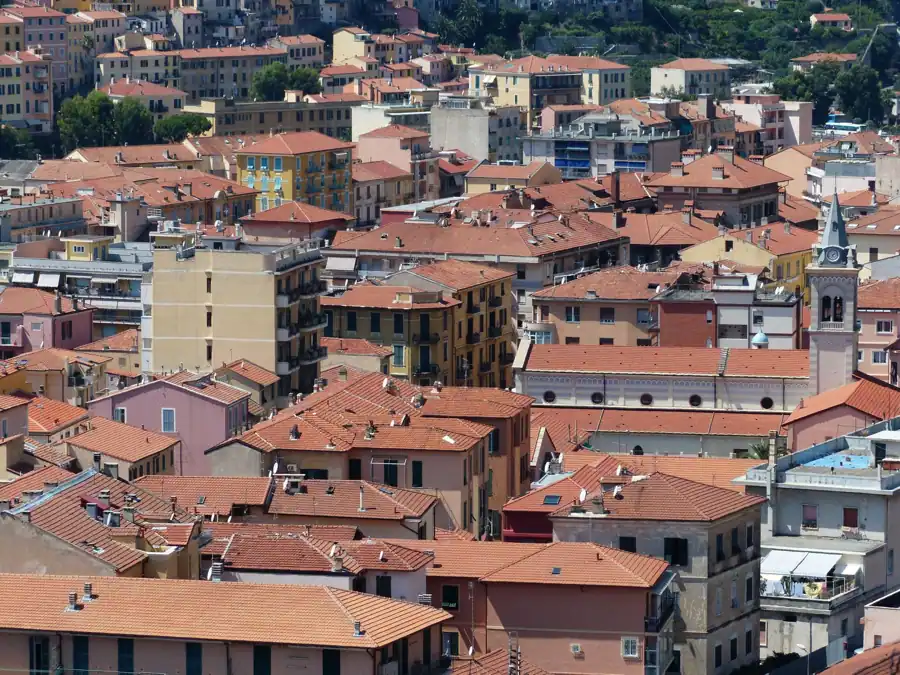
Florence rewards travellers who pick the right base. The historic centre is compact enough to cross on foot in about half an hour, but the difference between sleeping north of the river and sleeping in a residential quarter south of it shapes your whole trip. This guide covers the months worth targeting, the airports that connect Florence to the UK, how long to stay, and which neighbourhoods suit which kind of traveller.
Which month is best to visit Florence?
May, June, September and October give you the best combination of open weather and manageable crowds. Daytime temperatures sit comfortably in the high teens to mid twenties Celsius, terraces stay open into the evening, and you can walk the centre without the crushing heat of high summer.
July and August are the busiest and hottest stretch. Expect queues at the major galleries, higher room rates, and afternoons that push you indoors. If a summer holiday to Florence in Italy is the only window you have, book timed entry slots for museums well before you travel and plan your walking for early morning.
Winter has its own appeal. November through February is quiet, accommodation is at its cheapest, and the city's churches and palaces are far easier to enjoy without crowds. Some smaller family-run restaurants close for part of January, so check opening hours if you have specific places in mind.
Late spring and early autumn also line up with the best of the surrounding countryside. Chianti villages, the Tuscan hills and day trips toward Siena or Pisa are far more pleasant in May or September than in August.
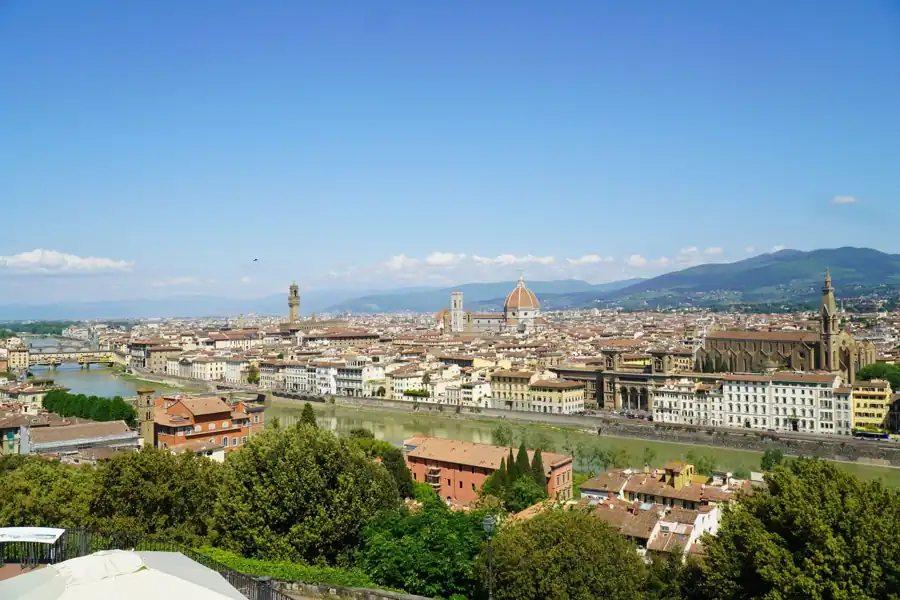
Photo: Samual lim · Pexels
Which airport flies direct to Florence from the UK?
Florence's own airport is Amerigo Vespucci, usually called Florence Airport or Peretola. It sits roughly 5 km from the city centre and is small, quick to navigate, and easy to reach by tram or taxi.
Direct UK routes to Florence have changed a lot since the pandemic, and which carriers serve which British airports shifts season by season. Rather than guess, check the current schedules from your nearest airport before you book accommodation, because a route that existed last summer may not run this one. British Airways has historically served Florence from London, and several low-cost carriers have flown seasonal routes from regional UK airports.
The reliable alternative is Pisa's Galileo Galilei airport, which takes far more UK traffic and sits about 80 km from Florence. From Pisa you can reach the city by train in around an hour, or by road in roughly the same time depending on traffic. Many travellers flying a holiday to Florence in Italy land at Pisa and treat the transfer as part of the trip.
Bologna is a third option, around 105 km away and connected by high-speed rail. If Florence flights are expensive or awkward on your dates, price Pisa and Bologna before you commit.
Is 3 days in Florence too long?
No. Three days is close to ideal for a first visit, and it is not too long by any measure.
Two days gets you the Duomo, the Uffizi, the Accademia and a walk across the Ponte Vecchio, but at a pace that leaves little room for sitting still. Three days lets you add the Oltrarno, the Boboli Gardens, Santa Croce and a half day in Fiesole or a Chianti village without sprinting.
Four or five days opens up proper day trips: Siena, Pisa, Lucca or the Tuscan hill towns. If you are renting an apartment for a week, Florence works well as a fixed base with the rest of Tuscany reached by train or car.
The one case where three days can feel long is a repeat visit in peak summer, when heat and crowds limit how much you want to do in a day. Even then, most people find plenty to fill the time.
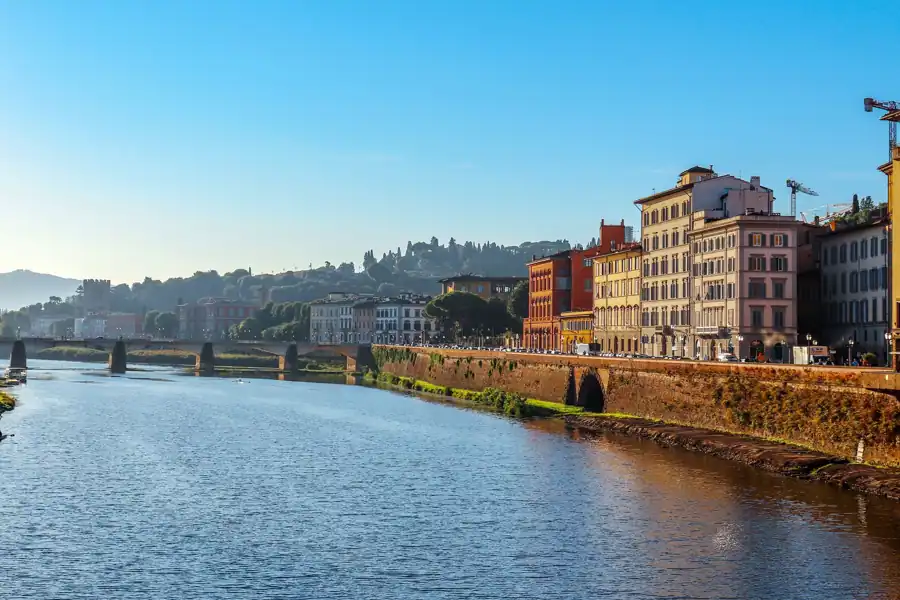
Photo: Claudia Solano · Pexels
What is the nicest part of Florence to stay in?
There is no single answer, because the best area depends on whether you want to be in the middle of things or sleep somewhere quieter.
Centro Storico, the area around the Duomo and Piazza della Signoria, puts you within walking distance of everything. It is the most convenient choice and also the noisiest and most expensive. Apartments here book out early for spring and autumn.
Santa Croce sits just east of the centre. It is central enough to walk everywhere, slightly calmer at night, and has a good spread of restaurants and bars that locals actually use.
San Lorenzo and the Mercato Centrale area suits anyone who wants market food, leather stalls and a short walk to the train station. It is busier and more touristy than Santa Croce but very practical for early trains.
Oltrarno, on the south bank, is the pick for travellers who want a neighbourhood feel. Santo Spirito and San Frediano have workshops, trattorias and a slower rhythm, and you are still only 10 to 15 minutes on foot from the Ponte Vecchio. This is where a lot of holiday rentals in Florence, Italy offer better space for the money.
Santa Maria Novella, around the main station, is the most practical base if you are arriving late or leaving early. It is not the prettiest quarter, but it is well connected and often cheaper.
For views, the streets climbing toward Piazzale Michelangelo and San Miniato al Monte give you the classic panorama, at the cost of a steep walk home.
Where to avoid staying in Florence?
Avoid anything directly on the busiest pedestrian arteries if you value sleep. Rooms overlooking the Duomo, Via de' Calzaiuoli or the Ponte Vecchio look wonderful in photos and come with tour groups, street noise and delivery traffic from early morning until late.
The immediate ring around Santa Maria Novella station is convenient but not charming. A few blocks north or west of the station improves things considerably, so treat the station itself as a boundary rather than a destination.
Outer suburbs well beyond the historic centre make little sense for a short break. If you are more than about 3 km from the river, you will spend your trip on buses and trams rather than in the city.
One practical warning: Florence has a limited traffic zone covering much of the centre. If you rent a car, confirm with your accommodation whether you can legally drive to the door and where you are allowed to park. Fines arrive by post months later.
Florence, holidays and the city itself
Florence is the capital of Tuscany and, as of 2026, home to 361,625 people, making it the eighth most populous city in Italy. The wider metropolitan province counts 988,494 residents, and Eurostat puts the urban area at 696,767. The larger Metropolitan Area of Florence, Prato and Pistoia, created in 2000 across roughly 4,800 square kilometres, holds about 1.5 million people.
Those numbers matter when you are choosing where to stay. The historic core is tiny relative to the population around it, which is exactly why central accommodation is scarce and why the Oltrarno and the streets beyond the station offer better value.
For a city break, most travellers do not need a car at all. Trains connect Florence to Pisa, Bologna, Rome and Venice, and the centre is walkable. A car only makes sense if you plan to explore rural Tuscany, and even then it is often easier to hire one for the days you need it rather than for the whole stay.
FAQ
Which month is best to visit Florence?
May, June, September and October offer the best balance of weather and crowds. July and August are hot and packed, while November to February is quiet and cheaper but colder. If your dates are fixed to summer, book museum slots in advance and do your walking before 10am.
Which airport flies direct to Florence from the UK?
Florence's own airport, Amerigo Vespucci or Peretola, is about 5 km from the centre and does receive UK flights, but direct routes change frequently. Check current schedules from your local airport before booking. Pisa, roughly 80 km away and about an hour by train, is the more reliable alternative, with Bologna a further option at around 105 km.
Is 3 days in Florence too long?
Three days is close to ideal for a first trip. It covers the Duomo, the Uffizi, the Accademia, the Oltrarno and still leaves time for a half-day trip to Fiesole or a Chianti village. Two days feels rushed, and four or five days lets you add Siena, Pisa or Lucca.
What is the nicest part of Florence to stay in?
It depends on your priorities. The Centro Storico is the most central, Santa Croce is calmer but still walkable, and the Oltrarno offers a neighbourhood atmosphere with more space for the money. Santa Maria Novella suits early trains and late arrivals. For views, look at the streets rising toward Piazzale Michelangelo.
The short version
Base yourself in Santa Croce or the Oltrarno if you want a balance of location and quiet, and accept the Centro Storico only if being steps from the Duomo matters more than sleep. Aim for May, June, September or October. Plan on three days minimum, four or five if you want day trips. Check current UK flight routes rather than assuming, and price Pisa as a backup. Book spring and autumn accommodation early, because the historic centre is small and the good apartments go first.
More on the site
- Travel Guides
- Information about Italy
- Music of Italy
- National Holidays in Italy
Read next
Cyprus holiday 2026 — what to know before you book
Book a Cyprus holiday in 2026 and you get 300-plus days of sun, 64 Blue Flag beaches and a flight from the UK of around four and a half hours. The cat…
Holiday rentals north Wales — what to know before you book
Book early, check the parking, and pick your base by what you'll actually do, not by the prettiest photo. Holiday rentals north Wales range from rough…

A practical guide to holiday rentals in Protaras
Is Protaras a good base for a holiday in Cyprus? Protaras sits on the south-eastern shore of Cyprus , roughly 10 km north of Ayia Napa, and it grew fr…