
Villa holiday rentals Spain — what to know before you book

Book the villa for the people, not the photos. A private pool, a 2-3 hour flight from the UK and a week of self-catering in the sun sounds simple, but the difference between a great villa holiday rental in Spain and an expensive mistake usually comes down to four things: total cost, location, licence and what the price actually includes. Get those right and the rest is sunshine.
What a villa in Spain really costs
The headline weekly rate is rarely the number you pay. A villa advertised at €1,200 a week in July can land closer to €1,700 once cleaning, linen, pool heating and a security deposit are added, and that's before flights.
Broadly, expect to pay more for a private pool, a sea view, walkable restaurants and July-August dates. A village house with a shared pool in a quiet inland town can cost a fraction of a beachfront property 20 minutes away. If your budget is tight, moving 10-15 minutes inland is the single biggest saving available.
Those are mid-range figures for a three-bedroom property with a pool. Luxury villas on the Costa del Sol or in Mallorca in August run well past €4,000 a week, and the cheapest holiday apartment rentals in Spain can start under €400 a week out of season.
Coast, island or inland: choosing your region
Spain's regions behave like different countries, and the right one depends on how you'll spend your days. Beach-first families want the Costa Blanca or Costa del Sol; walkers and food lovers often prefer Andalusia's white towns or the green north.
| Region | Best for | Flight time from UK | Peak-week villa cost |
|---|---|---|---|
| Costa Blanca | Families, value | 2.5 hrs | €1,200-2,500 |
| Costa del Sol | Beaches, nightlife | 3 hrs | €1,500-4,000+ |
| Balearic Islands | Coves, short transfers | 2.5 hrs | €1,800-5,000 |
| Canary Islands | Winter sun | 4 hrs | €1,300-3,000 |
| Inland Andalusia | Culture, quiet, value | 3 hrs | €700-1,500 |
The Canaries sit further out but stay warm in January and February, which is why winter bookings there fill early. The Balearics are the opposite: short transfers and small islands, but peak prices to match.
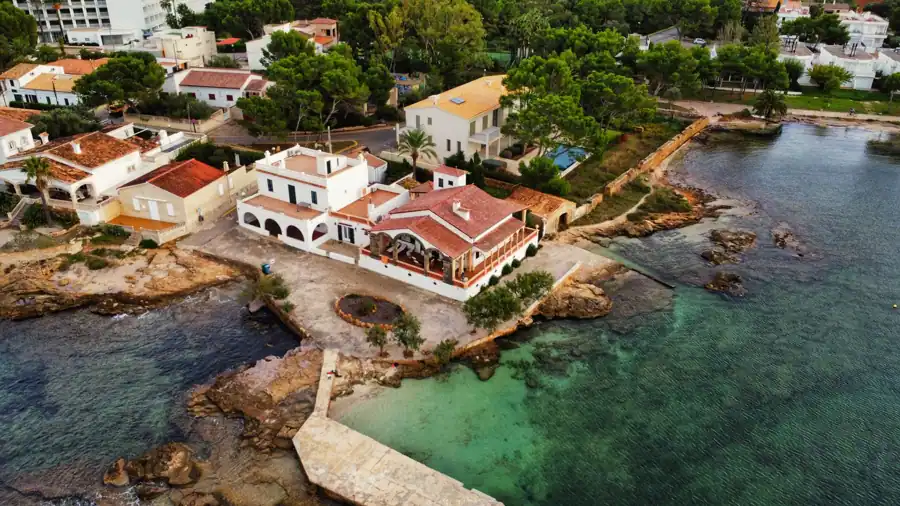
Photo: Hector MARABELLE · Pexels
Private pool: what the listing doesn't tell you
A private pool is the main reason people choose a villa over a hotel, and the main source of disappointment. Three details decide whether you'll actually swim in it.
- Heated or not. Most Spanish villas have unheated pools. In April, October and November, water can sit around 18-20°C (64-68°F), refreshing for a plunge, too cold for children to stay in long. Pool heating is usually an optional extra, often €100-250 a week.
- Cover or enclosure. A retractable cover or a glazed enclosure extends the swimming season by weeks at little extra cost.
- Fencing. Fenced pools are not standard in Spain. If you're travelling with toddlers, ask directly and get the answer in writing.
Ask for a photo of the pool taken in the last month, not a brochure shot from five years ago. Then check what time the pool is cleaned, an early-morning visit from a maintenance team is normal and worth knowing about.
Booking direct vs. through an agency
Booking direct with an owner can cut the middleman fee, but it also removes the safety net. Agencies and package providers hold your money in a protected structure; a private owner usually doesn't.
The trade-off is real, and it's worth being honest about which side matters more to you. Direct bookings often save 10-20%, and you deal with someone who knows the house. Agencies cost more but give you a contract, a complaints process and someone to call at 11pm when the air conditioning fails.
If you do go direct, look for a written rental agreement, a verifiable property address, a track record of reviews across more than one platform, and payment by card or bank transfer to a business account, never cash on arrival. Some owners list through booking platforms simply to reach more guests, so check whether you're paying a platform markup for the same house. If you own a property yourself, it's worth understanding how renting your holiday property direct can cut costs on both sides.
Photo: Daniel Nouri · Pexels
Licences, deposits and the paperwork that protects you
Short-term rentals in Spain are regulated, and licensed properties are listed on regional registers. Ask for the licence number, a legitimate owner will have it to hand.
Expect a security deposit, typically €200-500, refunded after checkout. Read the damage clause carefully: normal wear and tear should not be charged. Also confirm the cancellation terms in writing, because they vary wildly, some villas refund fully up to 60 days before arrival, others not at all.
Travel insurance is not optional here. It covers the gap between a cancelled flight and a non-refundable villa, and it's the cheapest part of the whole trip. If anyone in your group has mobility needs, check accessibility honestly before booking rather than on arrival, a disabled holiday apartment directory can help you filter for step-free access and adapted bathrooms.
The extras that quietly add to your bill
Villa rentals in Spain are usually self-catering, so budget for the things a hotel would include. None of these are hidden tricks, they're just easy to forget when you're comparing headline prices.
- Car hire. Many villas sit outside walkable villages. A week's rental in high season commonly runs €250-500, plus fuel.
- Air conditioning. Sometimes metered and charged on departure. Ask how it's billed.
- Final cleaning and linen. Often €80-150, sometimes included, always confirm.
- Mid-stay clean and towel changes. Standard in hotels, optional in villas.
- Tourist tax. Some regions, including the Balearics and Catalonia, levy a small per-night charge.
Add these up before you compare two properties. A villa that looks €200 dearer can easily be the cheaper week.
When to book for the best price
For July and August, book four to six months ahead, the best-value villas with private pools go first, and late bookers pay a premium for what's left. For May, June, September and October, two to three months is usually plenty, and prices soften noticeably once the school holidays end.
If your dates are flexible, the last week of June and the first week of September are the sweet spot: summer weather, shoulder-season rates, quieter beaches. Winter sun in the Canaries is the exception, that market books early and stays firm. And if you're weighing a villa against a hotel or an apartment, remember that self-catering holiday home rentals in Spain reward groups: the cost per person drops sharply once you're splitting a house six ways.
Frequently asked questions
Is a villa cheaper than a hotel in Spain?
For groups of five or more, usually yes, especially once you cook some meals in. For a couple, a hotel or apartment is often cheaper once cleaning fees and car hire are counted.
Do I need a car for a villa holiday in Spain?
Not always, but often. Villas within walking distance of shops and restaurants exist and cost more. If yours isn't, budget for a rental car and check parking at the property.
Are private pools in Spain heated?
Rarely as standard. Heating is usually an optional extra, and it matters most in April, May, October and November. Ask for the actual water temperature, not just "heated".
How much deposit will I pay?
Typically €200-500, refunded after checkout, plus a booking deposit of around 25-30% at the time of reservation. Get the refund timeline in writing.
Can I book a villa in Spain with flights included?
Yes, package providers bundle villa and flights with financial protection, which is worth paying for if you'd rather not carry the risk of a cancelled flight yourself.
The short version
Decide your region by how you'll spend your days, then compare total weekly cost, not the headline rate. Confirm pool heating, fencing, licence number and cancellation terms in writing before you pay anything. Do that, and the villa you book in February is the one you're still happy with in August.
More on the site
Read next

Greece holiday islands — what to know before you book
Greece has over 200 inhabited islands, and the one you pick decides almost everything about your trip, the price, the crowds, the beaches and how much…

Where to stay in Florence, Italy
Florence rewards travellers who pick the right base. The historic centre is compact enough to cross on foot in about half an hour, but the difference …
Cyprus holiday 2026 — what to know before you book
Book a Cyprus holiday in 2026 and you get 300-plus days of sun, 64 Blue Flag beaches and a flight from the UK of around four and a half hours. The cat…